
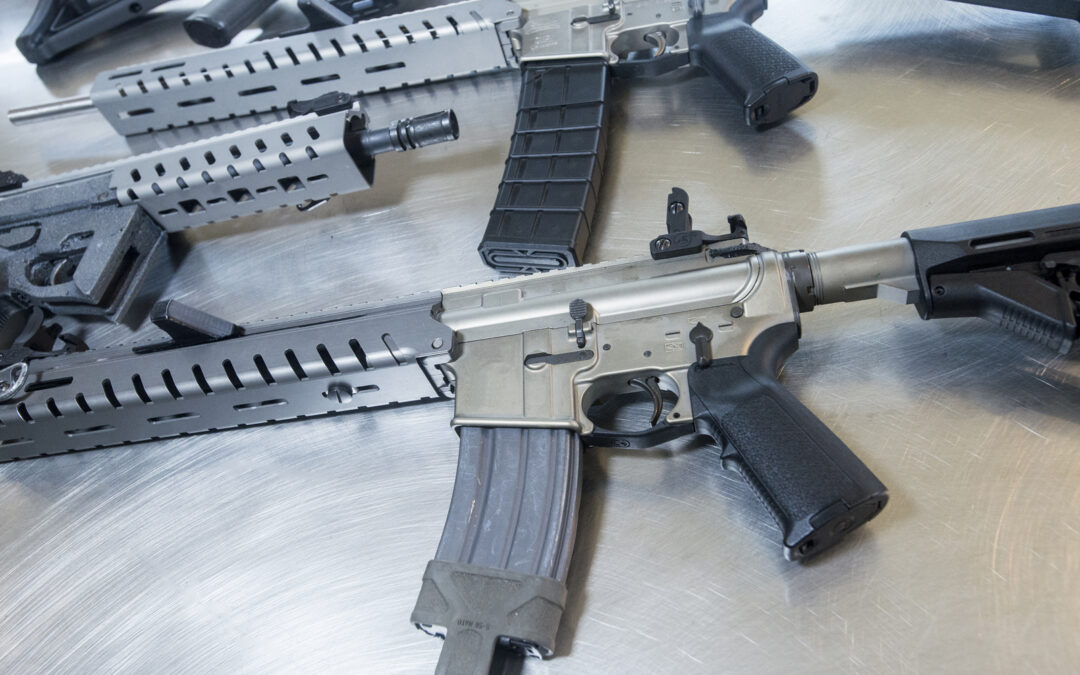
The AR-15 has earned its reputation because it adapts. Barrels, gas systems, stocks, triggers, optics—nearly every part of the rifle has evolved to meet how people actually use it. The charging handle is one of the few controls that has remained largely untouched, even though it shapes how the rifle is manipulated more than most shooters realize.
The charging handle is the main interface between you and the action. Every administrative load, chamber check, malfunction clear, and manual bolt movement passes through that control. Even if you never touch it during a clean string of fire, you touch it constantly across real use. That makes its location more consequential than most shooters initially give it credit for.
The standard rear charging handle works. It has worked for decades. But “working” and “working well” are not the same thing, especially once optics, modern shooting positions, and realistic manipulation under stress enter the picture.
A forward-mounted charging system addresses several friction points baked into the original layout, by moving the control to where it’s easier to reach and easier to use. That’s where the side-charging AR-15 started gaining traction. Instead of reaching back into the receiver, the shooter works the action from the side, closer to the balance point of the rifle.
It’s not a radical redesign of the platform. The bolt still cycles the same way. The gas system still does its job. What changes is the interaction. Your support hand stays in its lane, your firing hand stays on the grip, and the charging motion happens where your hand already lives.
After you’ve spent a little bit of time on a side-charging rifle setup, it stops feeling like an “alternative” and starts feeling like a more natural layout for how most modern ARs are actually run.
Once you start paying attention to it, the charging handle shows up everywhere in how the rifle feels. You notice it when you’re say, behind glass instead of irons, when you’re working around a barricade, or when you’re trying to keep the gun tucked in instead of flaring elbows and breaking position. And it’s honestly one of those controls that you don’t think about much until it slows you down. (But then, you can’t un-notice it.)
A lot of AR-15 users just learn to coexist with the rear handle. They add extended latches, tweak their technique, and keep moving. That works, but it’s still a workaround. Moving the charging handle forward doesn’t change how the rifle cycles or how the bolt locks up. It just changes where your hand goes when you need to make the rifle do something. Once that motion lines up with where your support hand already lives, the whole process feels less like a special maneuver and more like part of running the gun.
Why the Rear Charging Handle Became the Standard
The rear charging handle made sense in the context it was designed for. Early AR rifles prioritized a straight-line recoil system, lightweight materials, and simplicity of manufacture. Placing the charging handle at the rear kept it out of the way during firing and allowed the bolt carrier group to remain fully enclosed.
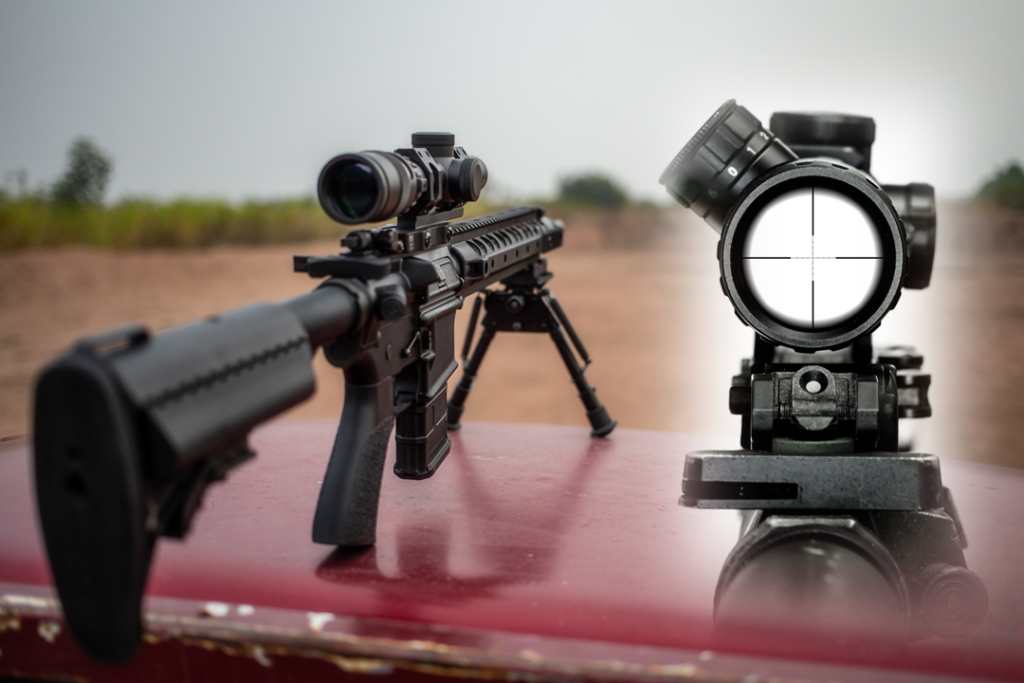
For iron-sight rifles fired from relatively upright positions, it was a workable solution. The shooter could break cheek weld, reach back, cycle the action, and get back on target without much consequence. Training doctrine formed around that reality, and the design stuck.
The problem is that almost everything else about the AR has moved forward since then.
The Ergonomic Cost of Reaching Rearward
A rear charging handle requires the shooter to reach behind the receiver, often with the support hand, sometimes with the firing hand, depending on technique. Either way, it interrupts the firing position. Grip pressure changes. Cheek weld shifts. Sight alignment is lost, even if only briefly.
Once an optic is mounted—especially a magnified optic or one with a large ocular housing—that motion becomes more awkward. The handle sits under the optic, close to the face, and requires clearance that may not exist without exaggerated movement. Suppressors, gloves, body armor, and tight shooting spaces compound the issue.
Most shooters adapt. They learn workarounds. But adaptation doesn’t erase inefficiency. It just hides it.
Forward Charging as a Different Control Philosophy
A forward-mounted charging handle changes the interaction entirely. Instead of reaching behind the rifle, the shooter reaches forward, closer to the balance point of the gun. The motion resembles working a bolt or racking the slide on a pistol—actions most shooters already perform instinctively.
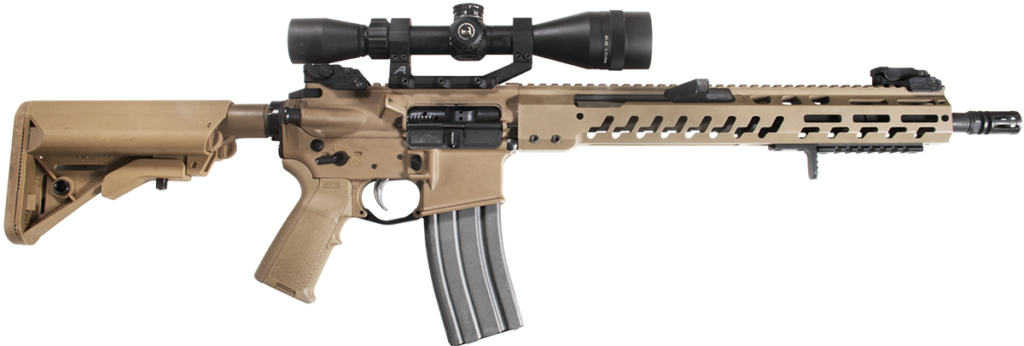
Depending on the design, the handle may be mounted on the side of the receiver, attached directly to the bolt carrier group, or integrated into a monolithic upper. Some systems reciprocate with the bolt. Others remain stationary during firing. Each approach has tradeoffs, but all share some common benefits. For one the charging action happens in front of the shooter’s face, not behind it. That alone reduces disruption to grip and sight picture.
Maintaining Position While Running the Gun
One of the biggest practical advantages of a forward charging system is the ability to keep the rifle shouldered while cycling the action. The shooter can stay in the optic, maintain cheek weld, and keep the muzzle oriented toward the target area.
This matters most when clearing malfunctions, running the bolt after a reload, or administratively manipulating the rifle without breaking position. The fewer times the rifle leaves the shoulder, the more consistent the shooter’s follow-up actions become.
It’s one of those details that doesn’t seem critical until you spend time working the gun repeatedly, especially with an optic mounted low and tight.
Optics Changed the Equation
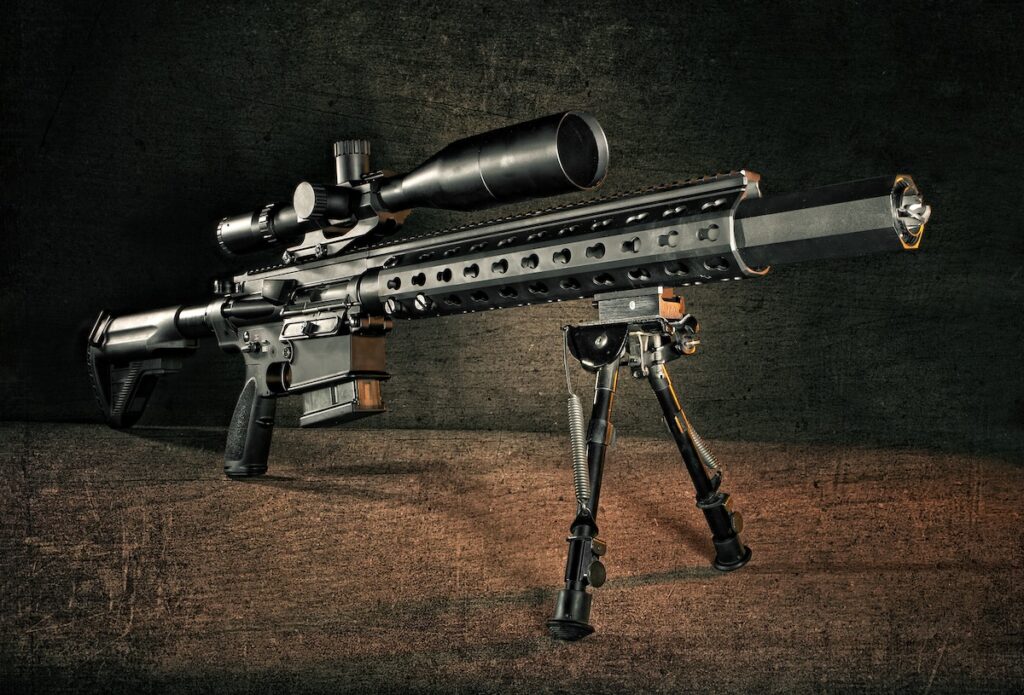
The AR-15 was not originally designed around modern optics. Red dots, LPVOs, magnifiers, and night vision all compete for space on the upper receiver. As optics have become larger and more capable, the rear charging handle has become harder to access cleanly. Extended latches help, but they don’t solve the underlying issue.
They still require the shooter to reach back into a crowded area, often near the face. A forward charging handle sidesteps that congestion entirely.
The charging motion happens away from the optic, away from the shooter’s eye, and without threading fingers between mounted equipment.
Support-Hand Manipulation
Most shooters already use their support hand to manipulate controls forward of the receiver: magazine changes, bolt releases, handguard indexing. A forward charging handle fits naturally into that workflow.
For shooters with experience on bolt-action rifles or other side-charging platforms, the movement feels familiar. Even for those without that background, the learning curve is shallow. The action is visible, reachable, and mechanically intuitive.
Once trained, the motion becomes automatic, and switching back to a rear charging handle often feels clumsy by comparison.
What’s happening there is biomechanics. Your support hand already lives forward of the receiver, because, that’s where leverage and balance are. It manages recoil, drives transitions, stabilizes the rifle against barricades, and handles reload sequencing. Now asking that same hand to move a few inches to cycle the action is a smaller demand than asking it to leave the fore-end, travel rearward under an optic, and then return to position.
There’s also the visibility aspect that doesn’t get talked about too much. When the charging interface is forward or on the side, you can actually see what your hand is doing. You can watch the ejection port. You can confirm movement of the bolt carrier. With a rear T-handle tucked under glass, most of that interaction is happening out of sight and partially behind your face. It works, but it’s indirect.
Under stress, people default to gross motor movement and the path of least resistance. A forward or side-mounted charging motion is shorter and more linear. The shoulder stays set. The firing hand stays planted. The rifle stays oriented. That consistency is what makes the motion feel cleaner over time. It’s not that it’s faster in some dramatic way. It’s that there’s less unnecessary movement built into the sequence.
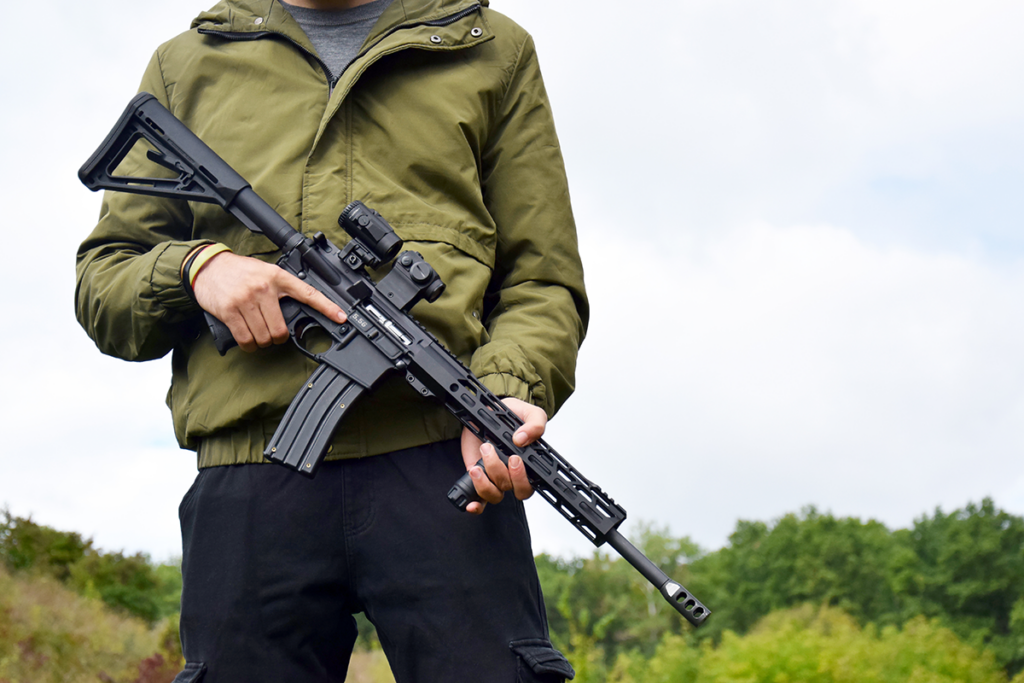
And after a few range sessions, you stop thinking about it entirely. Your support hand runs the action the same way it runs everything else on the front half of the rifle. When you go back to a rear handle, the extra reach suddenly feels like a detour. You can still run it. It just feels like you’re taking the long way around for something your hand was already positioned to do.
Reciprocating vs Non-Reciprocating Systems
Forward charging systems generally fall into two categories: reciprocating and non-reciprocating.
- A reciprocating handle is directly attached to the bolt carrier and moves every time the action cycles. When the rifle fires, the handle travels with the carrier. Because of that direct linkage, the shooter can use it to manually drive the bolt forward if needed. The tradeoff is that the handle occupies space during live fire. Grip placement, barricade work, and mounted accessories have to account for that movement, especially on rifles run with an aggressive support-hand position.
- Non-reciprocating handles remain stationary while the bolt cycles. The shooter pulls the handle to move the carrier, but once released, the handle stays in place during firing. That keeps the control out of the support-hand workspace and reduces the chance of contact with gear or hands during live fire. Achieving that separation typically requires additional internal components or linkage, which adds mechanical complexity compared to a simple direct-attach design.
- Reliability
Anyone adopting a forward-charging system should understand what parts are unique to that design and plan accordingly. That said, it’s also important to recognize that a well-designed forward charging system isn’t going to inherently reduce reliability by adding complexity. In some cases it can actually simplify the system by eliminating the traditional charging handle channel and related components.
A Tip
Where the charging handle lives changes how you run the rifle when things speed up. If you bounce between systems without thinking about it, there’s a good chance your hand goes to the wrong place at the worst possible moment. Anyone who’s spent time on a forward-charging setup has had that split second of reaching forward on a standard AR, and the reverse happens just as easily.
That’s not an argument for one system over the other. It’s just the reality of muscle memory. Once you settle on a charging layout, keeping it consistent across your main rifles can keep everything smoother.
There’s a tendency to treat awkward manipulation as a training problem. Reps matter. Familiarity matters. But training doesn’t change geometry. If your optic mount crowds the rear of the receiver, no amount of practice makes that space larger. What reps can do is help you work around the layout. What better layout can do, is remove the workaround altogether.
Rear vs Side vs Forward – What Actually Changes?
Rear charging remains the most standardized setup. Parts are everywhere. Training transfer is simple. If the rear receiver area stays relatively open, the system feels normal and efficient. Its limitation shows up when optics, magnifiers, or night vision begin competing for that same physical space.
Side charging moves the manipulation to the side of the upper receiver. The support hand runs the action with less reach-back movement. Optic crowding at the rear becomes less of an issue. Depending on the system, compatibility and proprietary components become considerations.
Forward-mounted side charging pushes the interface even closer to where the support hand already works. It clears the rear receiver area for optic placement and shortens the physical movement required to cycle the action. It asks more intent during the build process, but it removes the recurring congestion at the back of the rifle.
For more info, see AR-15 Charging Systems. Rear vs Ambi vs Side vs Forward.
A Control That Finally Caught Up
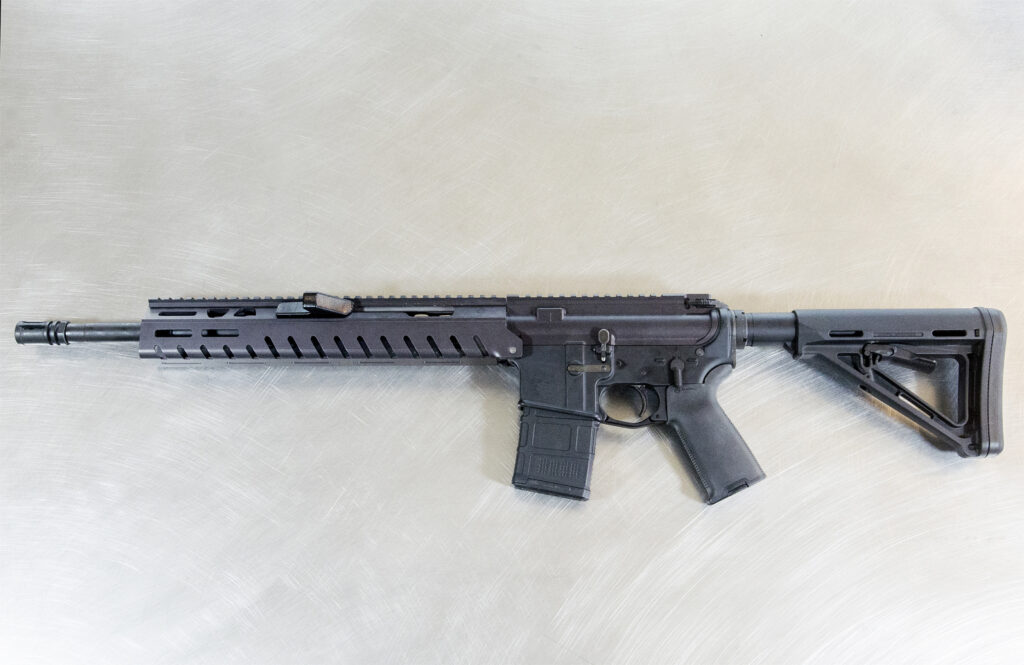
The AR-15 has evolved around how shooters actually use it. Adjustable gas systems, free-float handguards, improved triggers, and modern optics all exist because the platform matured beyond its original assumptions.
Forward-mounted AR-15 charging systems follow that same logic. They don’t “reinvent the rifle,” so to speak. But, they do relocate a critical control to a position that better suits modern shooting, modern equipment, and modern expectations.
So for AR-15 shooters who value staying on target, maintaining position, and not breaking their position every time they touch the bolt, a forward charging handle makes a lot of sense. It’s a small but powerful change that better fits how most people actually run an AR today, especially once your optics, gear, and real movement are part of the picture.