
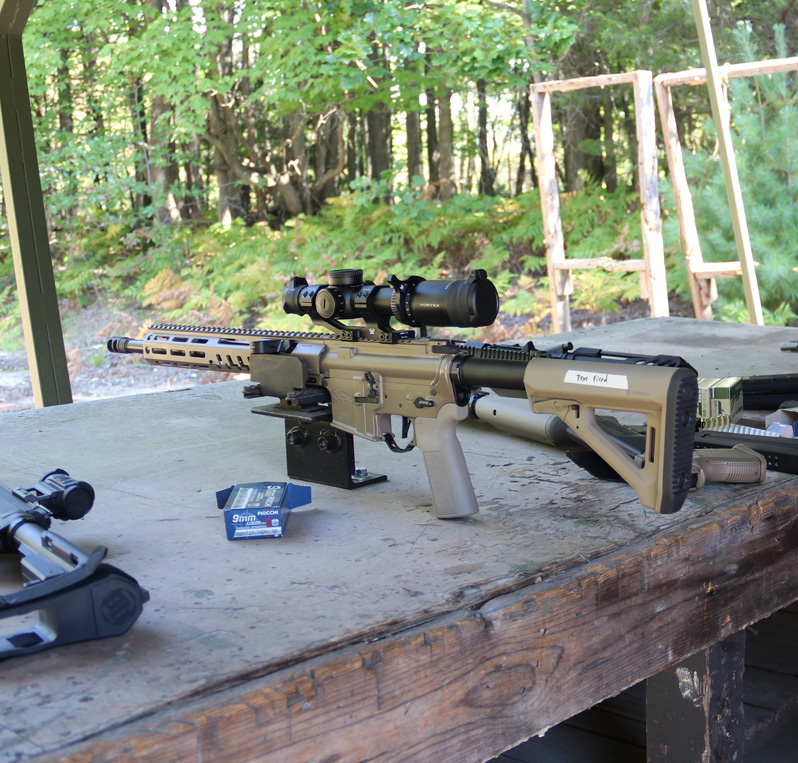
A side charging AR-15 moves the charging handle from the rear of the upper receiver to the side of the firearm. That’s the mechanical change. Everything else — the claims about speed, ergonomics, and optics compatibility — follows from that one modification and how well a given implementation executes it.
This article explains how a side charging AR-15 works, what they reliably improve, what they don’t, and what separates a standard side charger from a forward-mounted one.
How the Standard Charging Handle Works (and Where It Falls Short)
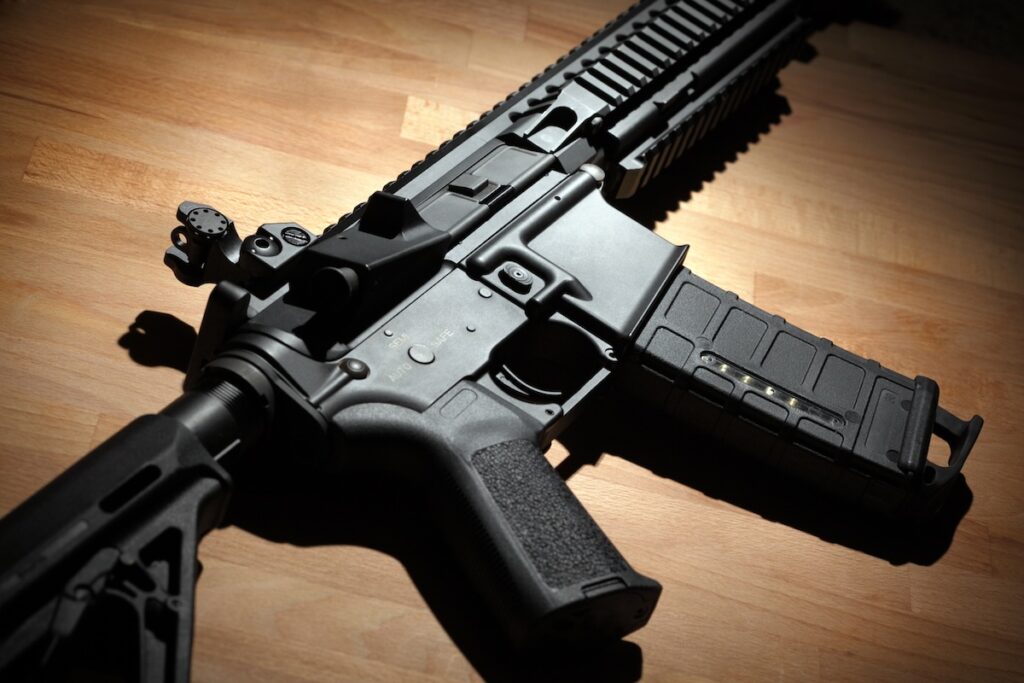
The traditional AR-15 charging handle sits at the rear of the upper receiver, directly beneath any optic mounted on the top rail. To charge the rifle, the shooter reaches over or around the receiver, grips the handle, and pulls rearward. Releasing it allows the bolt carrier group to travel forward and chamber a round.
This design has been in service since the 1960s without fundamental change. The limitations only surface in specific circumstances: when large optics obstruct access, when gloves or cold reduce grip, when the shooter needs to clear a malfunction without significantly shifting position, or when speed in cycling the action matters.
For a rifle running just iron sights or a small red dot, the standard rear handle is rarely a big problem. For a modern rifle running a magnified scope, a night vision device, or a stack of accessories on the rail, it can be.
What Changes With a Side Charging Handle
A side charging AR-15 replaces the rear handle with a charging interface mounted on the side of the receiver — typically the left side, though right-side and ambidextrous versions exist. The bolt carrier group is modified to include a pin or knob that protrudes through a slot milled into the side of the upper receiver.
The single most important mechanical distinction in any side charging design is whether the handle reciprocates or not.
On a reciprocating side charger, the handle moves rearward with the bolt carrier group each time the rifle fires. On a non-reciprocating design, the handle stays stationary during the firing cycle and only moves when the shooter manually operates it. Non-reciprocating is strongly preferred. A reciprocating handle that contacts the shooter’s hand during firing can cause a double feed and is generally disorienting in rapid fire. Most purpose-built side charging uppers use non-reciprocating designs, but this is worth confirming before any purchase — it isn’t universal.
Where This Design Came From
A side charging interface has been standard on military rifles since before the AR-15 existed. The StG 44, widely considered the first mass-produced assault rifle, used a left-side reciprocating charging handle in 1943. The AK-47 followed in 1947 with a right-side reciprocating handle that influenced decades of rifle design. The AR-18, designed in 1963 as a more manufacturable alternative to the AR-15, used a right-side reciprocating handle fixed directly to the bolt carrier. The HK G36 and various other modern service rifles continued the use of side-mounted charging systems in military rifle design.
The AR-15 platform stayed with the rear charging design for decades largely due to military standardization, and the original design philosophy. Side charging configurations became more commercially common as the civilian market expanded and optics shifted from specialty additions to standard equipment. Now once a magnified scope became a common fixture on a fighting rifle rather than a competition accessory, the ergonomic case for moving the charging interface away from the rear of the receiver definitely strengthened considerably.
The Case for AR-15 Side Charging
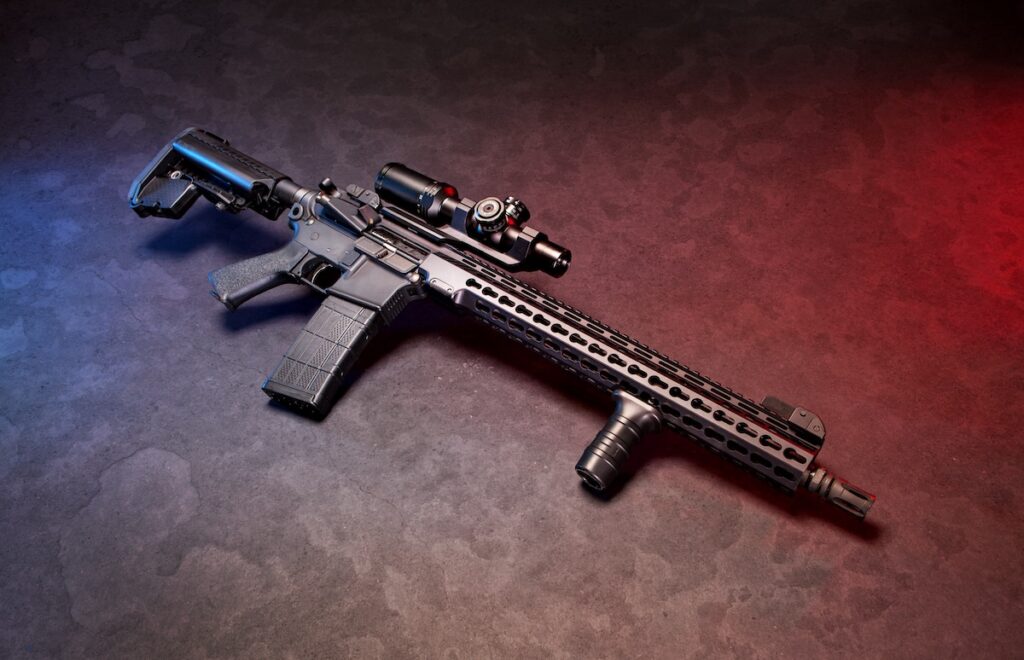
Optics clearance is a big, big reason shooters seek out this configuration. A standard rear charging handle sits directly beneath a mounted scope, red dot, or night vision device. Larger optics — variable-power scopes, tall mounts, bulky night vision setups — can make the rear handle difficult or impossible to reach without dismounting the weapon from the shoulder or breaking firing position. A side charging handle sits entirely clear of anything mounted on the top rail.
Malfunction clearance without breaking position. A standard tap-rack drill on an AR-15 requires the support hand to come off the handguard and reach back for the rear handle. On a side charger, the support hand travels a shorter, more accessible distance. In practical terms this allows the shooter to work through common malfunctions while maintaining cheek weld and keeping the trigger hand on the pistol grip.
Single-hand operation. Cycling a rear-charging AR-15 one-handed typically requires bracing the weapon against a surface or using an awkward cross-body reach. A side charging handle — particularly one positioned forward on the receiver — can be operated against a hard surface using techniques that are unconventional but achievable under duress.
Left-handed shooters. Left-side charging handles present a more natural charging motion for left-handed users than a design biased toward the right-hand dominant shooter reaching over the top of the receiver.
Confined spaces. A rear charging handle requires enough room behind and above the receiver to complete the racking motion. In vehicles, tight shooting positions, or environments with overhead obstructions, that clearance may not exist. A forward-positioned side charging handle operates within a smaller envelope, keeping the manipulation closer to the body and within the shooter’s existing footprint.
What It Doesn’t Fix
Relocating the charging handle doesn’t change how the gas system, bolt, or firing mechanism function — a forward charging platform runs on the same mechanical principles as any other AR. The reliability the design addresses is operational: whether a shooter can consistently maintain position, access the charging interface under stress, and return to a firing-ready state in the seconds that matter. That kind of reliability, the human side, is directly affected by how naturally and quickly the operator can run the action.
Shooters with many years of ingrained muscle memory on a standard rear-charging AR will need some practice to charge, tap-rack, and manipulate the rifle correctly. That said, most shooters find the transition straightforward with some range time, and are likely to find the forward charging position feels more natural once the new pattern is established.
A more accessible charging interface improves the mechanics of a malfunction drill; it doesn’t execute the drill. No mechanical advantage replaces repetition. The upside is that under genuine stress, where fine motor skills degrade and dexterity is compromised, a better-positioned handle demands less from the shooter to operate correctly, which is when that margin matters most.
Forward Charging: Where the Design Goes Further
Standard side charging uppers typically place the charging interface near the rear portion of the upper receiver — moved to the side, but still toward the back of the rifle. Some designs position the charging point farther forward, along the mid-receiver or handguard area. This distinction is more significant than it might appear.
On a standard side charger, the support hand still travels rearward to a position roughly beneath the rear of the optic’s mounting footprint. On a forward-positioned design, the charging point sits ahead of most optic and accessory footprints entirely. The hand doesn’t travel as far from its natural support position on the handguard, and the shooter maintains better control throughout the manipulation.
This matters the most on heavily configured rifles. A rifle running a variable-power scope, a night vision device, and an IR laser occupies significant rail space across the rear half of the receiver. On that kind of setup, a standard side charger positioned near the rear of the receiver gains less optics clearance than it appears — the accessories have simply moved the obstruction problem forward. A patented forward charging architecture addresses this directly, positioning the charging interface where optics and accessories cannot occupy the same space.
The result is faster weapon handling in tight quarters and under elevated stress, with the firing grip maintained and the support hand returning to its natural position on the handguard after each manipulation. For a rifle configured for low-light or magnified precision work, forward charging is the more complete solution to the problem that side charging only partially solves.
What to Look for in the Mechanism
Non-reciprocating operation. The handle should not move during the firing cycle. Verify this before purchasing — it isn’t guaranteed by the side-charging category itself.
Handle size. Larger handles are easier to grip under stress, with gloves, or with degraded hand function. Compact handles that made sense for minimizing snag points can become a liability when fine motor control is reduced.
Side of the receiver. Left-side charging is most common and suits right-handed shooters. Right-side charging mirrors the AK manual of arms and suits left-handed users. Ambidextrous designs accommodate both but add mechanical complexity.
Upper receiver design. Side charging is not a feature that can be added to a standard AR-15 upper. The upper receiver itself must be designed around the mechanism. Some manufacturers offer side charging uppers intended to pair with standard mil-spec AR-15 lowers; others build complete rifles around the system. Confirm compatibility with existing components before purchasing a partial upper.
Handle retention. The handle should remain firmly in place during firing and during movement. A handle that works loose or develops play under use is a reliability concern in addition to being an annoyance.
The Bottom Line
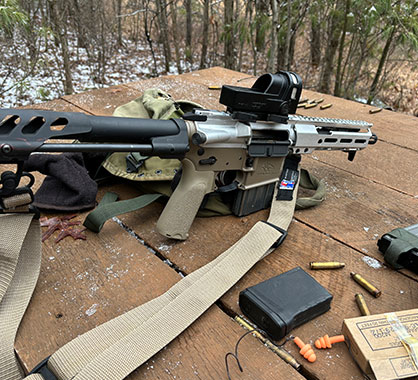
An AR-15 with a side charging handle solves a specific problem: accessing the charging interface when optics, accessories, or shooting position make the standard rear handle impractical. The more configured the rifle, the more meaningful the solution.
Standard side charging moves the handle out from under the optic. Forward charging goes further — keeping the charging point ahead of the entire accessory footprint and within reach without breaking grip or shifting position. For a rifle built around modern optics and used under real operational conditions, that difference is huge.
Neither version changes what the rifle does mechanically. Both change how the shooter interacts with it — and in critical moments, that interaction is what gets tested.