
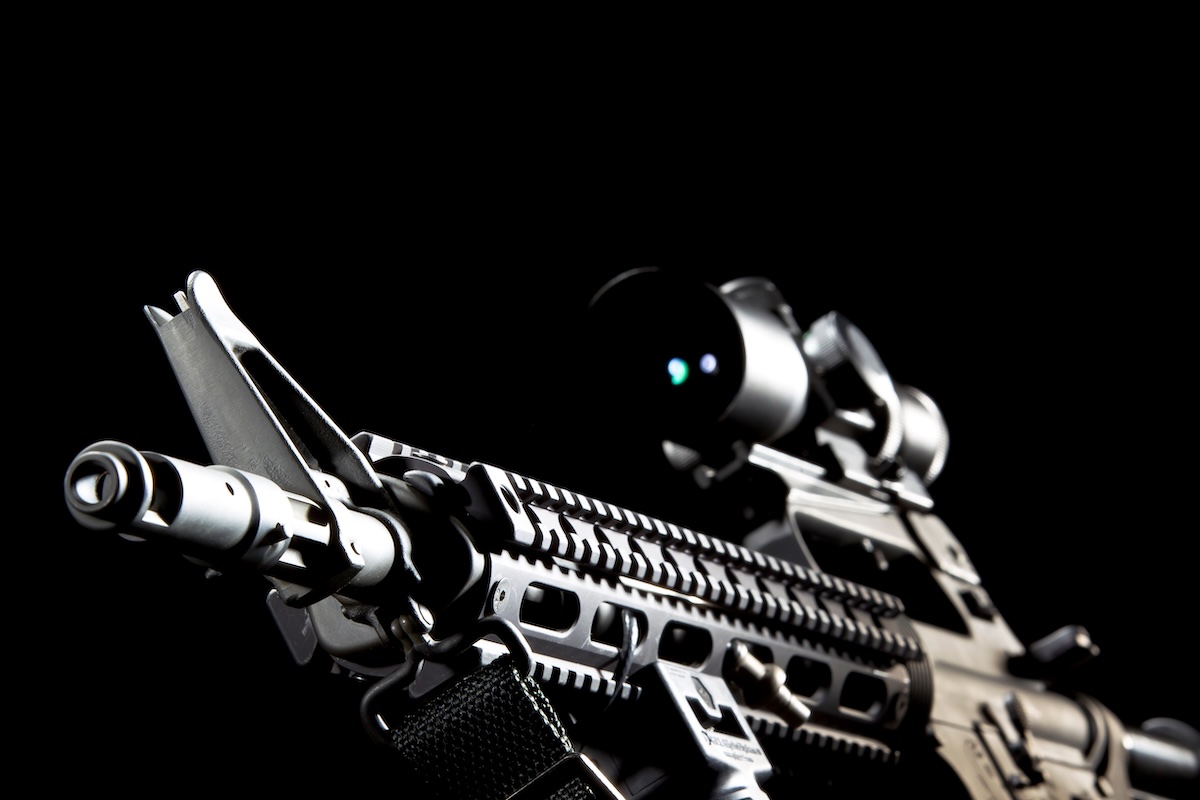
For most of the AR-15’s history, nobody spent much time thinking about the charging handle. It sat at the back of the receiver, tucked under the carry handle and later beneath whatever optic happened to be mounted on the rail. It worked, shooters adapted to it, and that was basically the end of it.
…Then rifles got better.
Modern ARs wear LPVOs, red dots stacked with magnifiers, night vision devices, thermal systems, backup irons, lasers, and enough accessories to make the top rail feel crowded. Suddenly, that little T-shaped charging handle hidden beneath everything became a lot less convenient. What was once a perfectly serviceable design started to feel like an awkward relic from an era before rifles carried so much equipment.
That shift is exactly why interest in the AR-15 charging handle upgrade market has exploded. Extended latches, ambidextrous handles, side chargers, and entirely new operating systems have all emerged to solve the same problem: making the rifle easier to run when conditions are less than ideal.
Among the more interesting developments is the patented forward charging system developed by Critical Objectives, which moves the charging interface away from the rear of the rifle entirely.
The question is whether that change is simply different—or genuinely better.
Why Shooters Upgrade Their AR-15 Charging Handle
Ask 10 experienced AR owners why they replaced their factory charging handle and you’ll probably get 11 slightly different answers.

Some just want larger controls. Others are tired of pinching their fingers between a scope, and the receiver. Competitive shooters want faster manipulations. Hunters wearing gloves in late-season weather need something easier to grab. Defensive shooters want to clear malfunctions without dramatically changing their grip.
The standard charging handle was designed in a very different era of rifle use. Eugene Stoner’s original system worked brilliantly for the military requirements of the 1960s… but it assumed a relatively uncluttered upper receiver. Well, that assumption no longer holds true. Because today, many rifles carry optics that extend well over the charging handle. Add a magnifier or night vision setup, and suddenly the shooter is reaching around expensive equipment every time they need to chamber a round, or clear a stoppage.
How the Standard AR-15 Charging Handle Works
On a traditional AR-15, the charging handle sits at the rear of the upper receiver. Pulling it to the rear retracts the bolt carrier group, allowing the shooter to chamber a round, inspect the chamber, or clear a malfunction.
For decades, shooters simply learned to work around the handle’s placement. Most still do.
With iron sights or a compact red dot, access is generally straightforward. Problems tend to emerge only after modern accessories enter the equation.
A low-power variable optic mounted in a cantilever mount can crowd the rear of the receiver. Thermal optics and night vision equipment occupy even more space. Suddenly, charging the rifle means fishing fingers into increasingly tight quarters.
It’s one of those things shooters often don’t notice until they spend a full day on the range repeatedly running drills.
After several hundred repetitions, ergonomics start to matter.
The Typical Charging Handle Upgrades Most Shooters Consider
Not every upgrade involves redesigning the rifle.
The overwhelming majority of AR owners begin with enhanced rear charging handles. Popular upgrades typically include:
- Larger latch surfaces.
- Ambidextrous controls.
- More aggressive texturing.
- Extended wings for gloved use.
- Improved gas mitigation on suppressed rifles.
These upgrades absolutely solve certain problems. An oversized ambidextrous handle is a meaningful improvement over a basic mil-spec part.
But there’s an important distinction here.
Most aftermarket charging handles improve grip on the existing design. They do not change the fact that the charging interface still lives underneath the optic.
That’s where side charging systems enter the picture.
What Is a Side Charging AR-15?
A side charging AR15 relocates the charging mechanism from the rear of the receiver to one side of the rifle.
Instead of reaching backward beneath an optic, the shooter grabs a handle mounted on the upper receiver itself. Depending on the design, that handle may sit toward the rear of the upper or somewhere closer to the center of the rifle.
This isn’t a new concept. Military rifles have used side charging systems for generations. The StG 44 employed one. The AK-47 built its manual of arms around one. The HK G36, FN SCAR, and countless others moved away from rear charging decades ago.
The AR-15 largely retained its original layout because of military standardization and the sheer dominance of the platform.
As optics became bigger and rifles accumulated accessories, shooters started asking an obvious question:
If nearly every other fighting rifle charges from the side, why doesn’t the AR?
The Advantages of Side Charging Systems
The biggest advantage isn’t only speed. It’s consistency. A properly designed side charger allows the shooter to manipulate the rifle without completely abandoning their firing position. And that becomes increasingly valuable as optics become larger and shooting environments become more complicated.
Some of the most practical benefits include:
Better Optics Clearance
The standard charging handle lives directly beneath the optic mount. Side charging moves that interaction away from expensive glass and crowded rail space.
Easier Malfunction Clearance
Clearing common stoppages often requires less movement. Instead of reaching back to the receiver, the support hand can stay closer to its natural position.
Improved Operation With Gloves
Cold weather, wet hands, and heavy gloves expose the weaknesses of small controls. Larger side-mounted interfaces are generally easier to grab under stress.
Better Function in Tight Spaces
Inside vehicles, barricades, or confined environments, every inch of movement matters. Side charging systems reduce the amount of space needed to cycle the action.
Less Disruption to Shooting Position
Maintaining cheek weld and preserving grip sounds like marketing language until you’ve spent hours shooting from awkward positions. Then it starts making a lot more sense.
Where Most Side Chargers Still Fall Short
Many shooters assume all side chargers solve the same problem. They don’t.
Traditional side charging uppers often relocate the handle to the side—but keep it near the rear of the receiver. Mechanically, that’s an improvement, but it doesn’t entirely eliminate the issues caused by modern optics.
A rifle equipped with:
- A 1-8x LPVO.
- A magnifier.
- Night vision equipment.
- An IR laser.
- Backup sights.
…still creates congestion around the rear half of the gun.
The charging handle may no longer sit directly beneath the optic, but the shooter often still has to reach backward into a crowded area to operate it.
That’s the gap Critical Objectives set out to address.
How the Critical Objectives Forward Charging System Works
Critical Objectives is a Michigan-based manufacturer focused on advanced small arms platforms built for demanding environments.
Rather than simply relocating the charging handle to the side of the upper receiver, the company developed a patented forward charging system that moves the charging interface farther toward the front of the rifle.
The practical effect is immediately obvious. Instead of breaking grip and reaching back beneath optics, the shooter can manipulate the rifle from a position much closer to where the support hand naturally rests on the handguard. That matters more than it might appear on paper (or, on a screen for that matter). Modern rifles increasingly resemble working tools rather than simple range toys. Accessories continue to move forward, optics continue to grow, and shooters continue to demand faster, more intuitive operation.
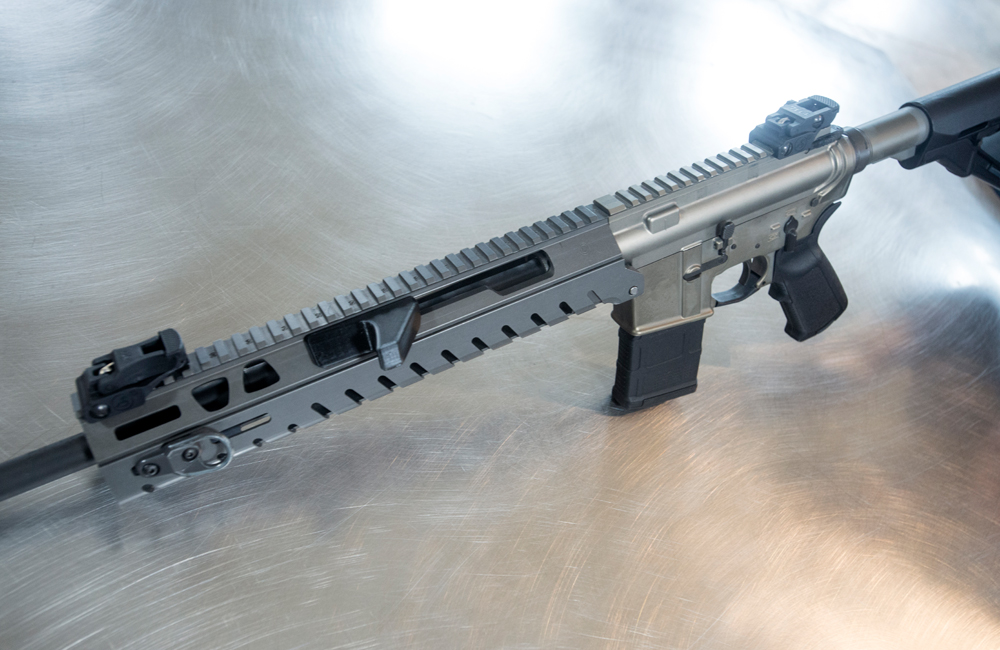
A charging system positioned ahead of that entire footprint changes the way the rifle handles.
According to Critical Objectives, the system was designed around several goals:
- Maintaining grip and control during manipulation.
- Improving efficiency under stress.
- Reducing interference from optics and accessories.
- Enhancing operation in confined environments.
- Delivering dependable performance in harsh conditions.
Unlike many aftermarket accessories, the forward charging architecture isn’t simply bolted onto an existing rifle. It is part of a purpose-built platform engineered around the charging system itself.
Does Forward Charging Make the Rifle More Reliable?
Mechanically, no. A forward charging system doesn’t alter the gas system, barrel, bolt, or lockup. The rifle still functions according to the same principles that have powered AR-pattern rifles for decades.
What changes is operational reliability.
There are really two kinds of reliability that matter:
- The first is whether the rifle itself functions.
- The second is whether the shooter can operate it quickly and correctly when things go wrong.
The latter doesn’t get enough attention. Under stress, people lose dexterity. Fine motor skills degrade.
Gloves get wet. Fingers get cold. Optics become obstacles. Movements that are usually effortless on a square range suddenly feel “clumsy.”
A charging handle upgrade can’t replace training… but it can reduce the physical demands placed on the shooter when those demands matter most.
What to Look for in an AR-15 Charging Handle Upgrade
Whether you’re considering an ambidextrous charging handle, a side charger, or an entirely different operating system, several factors deserve attention.
Non-Reciprocating Operation
A handle that moves during firing can create safety concerns and interfere with weapon manipulation. Many shooters strongly prefer non-reciprocating systems.
Optic Compatibility
Think about your rifle five years from now, not just today. The bigger and more complex your setup becomes, the more important charging handle placement becomes.
Ease of Use Under Stress
Can you comfortably operate the rifle while wearing gloves? Can you do it from awkward positions?
Compatibility
Some charging handle upgrades drop into any mil-spec rifle. Others require proprietary uppers or complete platforms.
Intended Use
A lightweight range rifle and a hard-use defensive carbine may benefit from very different solutions.
The Bottom Line
The traditional AR-15 charging handle has survived for more than half a century because it works. Millions of rifles prove that every day.
But well, as you know, “works” and “optimal” aren’t always the same thing. And as optics, suppressors, night vision systems, and accessories continue to reshape the modern rifle, shooters have started reevaluating parts of the platform that once seemed untouchable.
A basic charging handle upgrade improves grip. A side charger improves access. Forward charging systems like the one developed by Critical Objectives push the concept even further by moving the charging interface away from the optic footprint entirely. Now for you shooters running increasingly sophisticated rifles, that’s not a gimmick, it’s a different answer to a problem that many AR owners didn’t even realize they had until they started building modern guns.