
The rear T-handle has been part of the AR-15’s manual of arms since the rifle became the M16, and on a carry-handle upper with iron sights it sat right where it belonged.
Put a magnifier or a 1-8x LPVO (low-power variable optic) on a flattop upper with no carry handle, though, and that same handle sits close under the eyepiece.
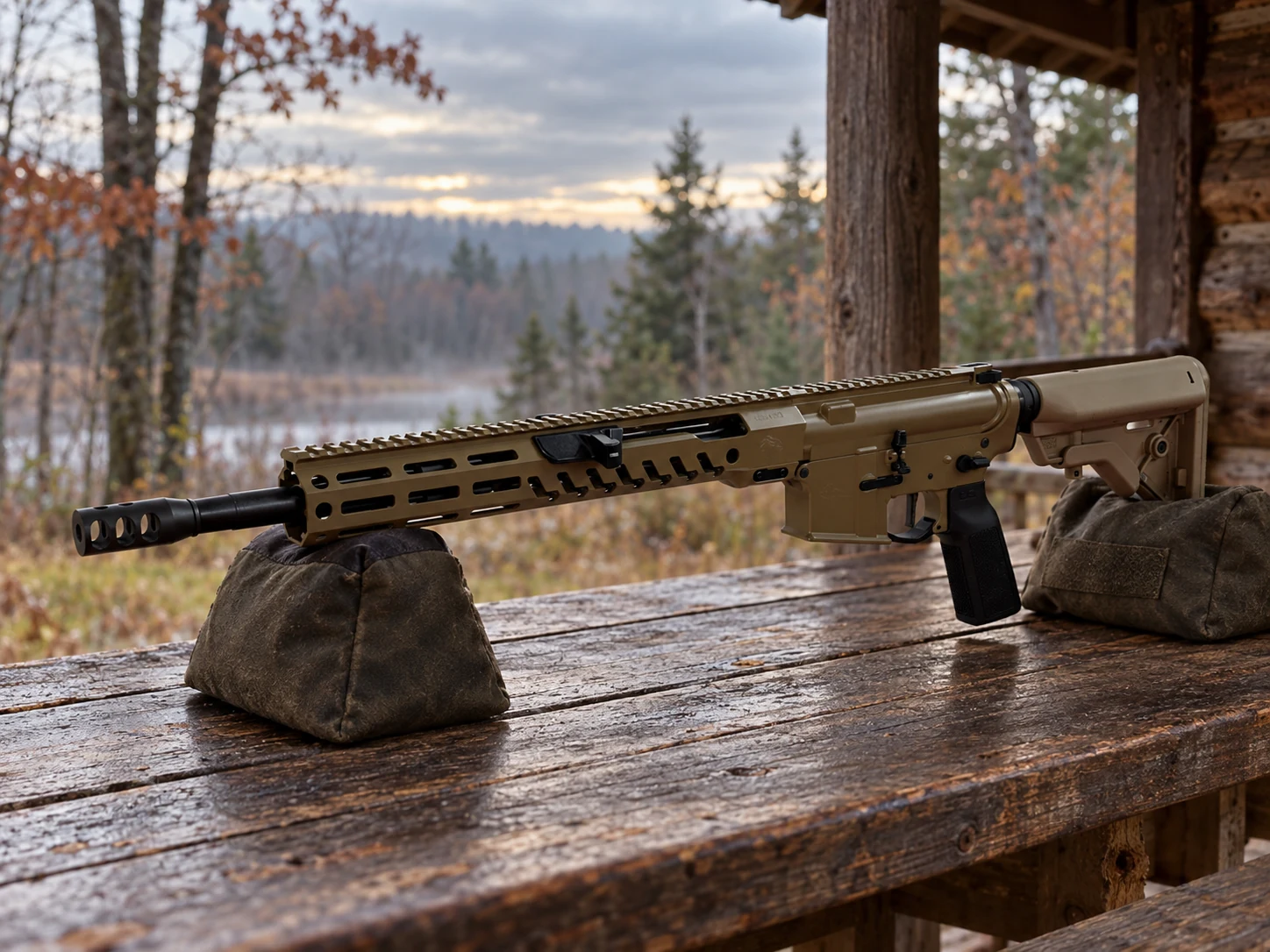
An AR forward mounted charging handle moves the job up to the handguard, where the support hand already rides. The firing hand stays on the grip, the eye stays behind the optic, and the handle stays parked while the rifle cycles.
That helps most when the rifle wears magnified glass, or a suppressor, or when the shooter is in body armor. It also gives left-handed AR-15 shooters a handle on whichever side they need.
A Short History of the AR-15 Charging Handle
Eugene Stoner’s AR-10 used a charging lever tucked inside the carry handle, shaped like an upside-down trigger. By the time the design was scaled down into the AR-15 and adopted as the M16, the charging handle had moved to the back of the upper receiver as the T-handle still found on most ARs today.
That rear handle rides in a channel on top of the upper and catches the gas key on the bolt carrier group (BCG) when you pull it. It doesn’t move when the rifle fires, because the AR’s charging handle is non-reciprocating.
The location made sense on a rifle whose rear sight lived in the carry handle. Flattop uppers, with a rail in place of the carry handle, moved optics down onto the receiver, and magnifiers and scope eyepieces started sitting right over the back of the gun, directly above the charging handle.
Charging an AR-15 with a Rear T-Handle
There are two common ways to work the rear handle with the rifle shouldered. The support hand can leave the handguard, reach back over or under the optic, pinch the latch and pull. Or the firing hand can break its grip and “blade” the handle, raking it back with the edge of the hand, a technique ambidextrous charging handles are designed to support.
Both methods work, and a trained shooter can run either one quickly. Each still takes a hand away from its main job. Support-hand charging pulls that hand off the handguard. Blading means the firing hand leaves the grip and has to find it again before the next shot.
Optic Clearance
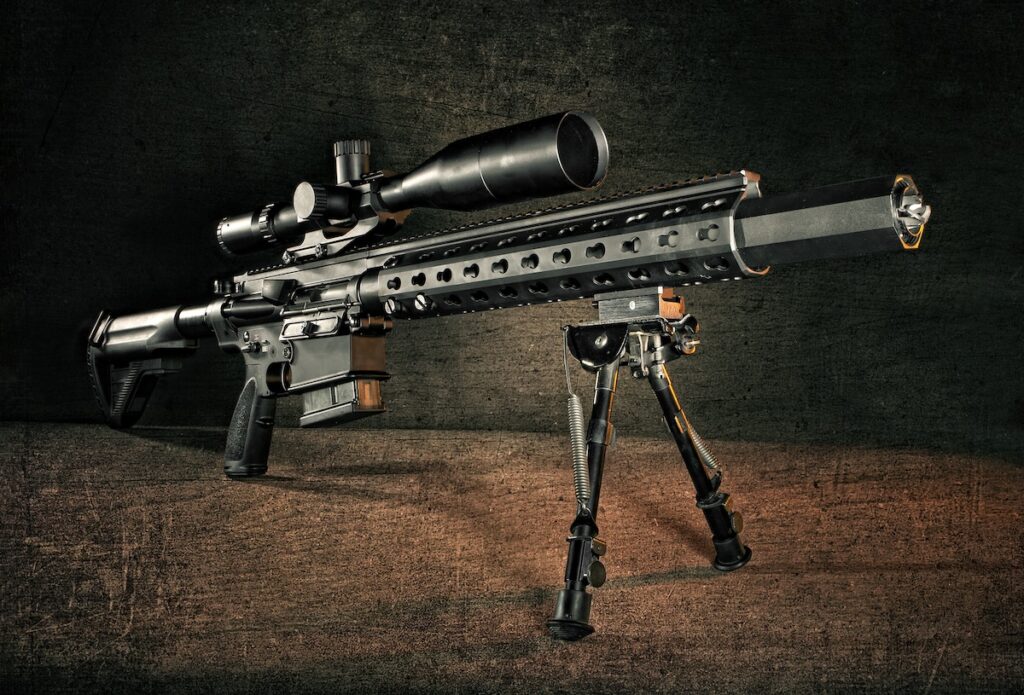
Magnified optics make the reach tighter. A flip-to-side magnifier behind a red dot, or the eyepiece of an LPVO in a cantilever mount/one that extends the scope forward of its base, can sit close enough to the latch that your fingers have to squeeze in under the glass.
Getting a grip on it can mean lifting your cheek off the stock or tipping the rifle to make room, and the sight picture goes with it. And as you know, gloves make it tighter still.
Extended latches and oversized ambidextrous handles exist largely to solve this problem, and they help. They also leave the pull point at the back of the gun.
Gas at the Back of the Upper
A suppressor raises back pressure, which pushes more gas back through a direct impingement AR’s action. (Direct impingement means gas from the barrel is piped straight back into the bolt carrier to cycle it.) Some of that gas escapes through the charging handle channel, close to the shooter’s face. Gas-busting charging handles redirect or seal part of it, and tuning the gas block, buffer and spring reduces how much gas comes back in the first place.
How a Forward Mounted Charging Handle Works
An AR’s forward mounted charging handle moves the pull point onto the handguard. On the Critical Objectives system, covered by U.S. Patent No. 12,196,517, a charging rod inside the handguard engages the front of the bolt carrier group. Pull a handle and the rod drives the carrier rearward against the buffer spring. Let go and the spring sends the carrier home, stripping a round off the magazine and chambering it.
The handle stays locked forward while the rifle fires and moves only when you pull it. Nothing cycles next to your support hand, your sling or your gear, and the space at the back of the receiver belongs to the optic.
Reciprocating and Non-Reciprocating Handles
A reciprocating charging handle is tied to the bolt carrier and moves with it on every shot. The AK and the Ruger Mini-14 work that way, and FN’s SCAR ran a reciprocating left-side handle for years before FN added a non-reciprocating, ambidextrous option to its semi-auto models in 2021.
Non-reciprocating handles stay put. The FN FAL and HK G3 both used non-reciprocating side chargers that lock in their forward position, and the AR’s own rear handle works the same way. A forward mounted AR handle keeps that trait and moves the handle to where the support hand already is.
Left, Right or Both Sides
The Critical Objectives system is ambidextrous. The 02 Talon rifle ships with both left and right handles, and you can run either one or both with no extra parts to buy.
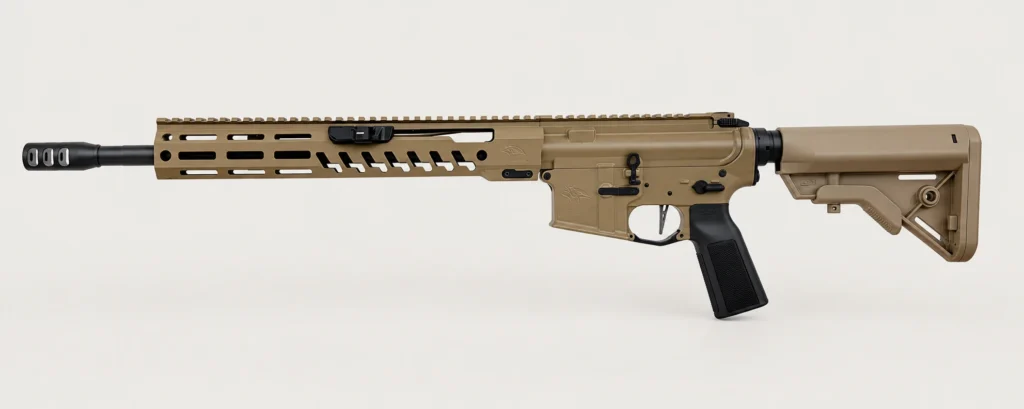
A right-handed shooter typically charges from the left side with the support hand. A left-handed shooter can run the right-side handle, and anyone who switches shoulders around cover can keep both installed. Safeties, magazine releases and bolt catches all come in ambidextrous versions as well, so a full ambidextrous AR-15 setup can pair them with a two-sided AR forward charging handle.
Rear vs. Forward Charging Handle Comparison
Here’s how the two layouts compare on a modern, optic-equipped AR.
| Feature | Rear T-Handle | Forward Non-Reciprocating Handle |
|---|---|---|
| Handle location | Top rear of the upper receiver | Side of the handguard, ahead of the receiver |
| Hand that charges | Support hand reaching back, or firing hand blading | Support hand, from its spot on the handguard |
| Firing grip while charging | Depends on technique; blading breaks the grip | Stays on the grip |
| Optic clearance | Magnifiers and scope eyepieces can crowd the latch | Handle sits clear of the optic and mount |
| Moves when firing | No | No |
| Left-handed use | Ambidextrous replacement handles available | Left, right or both sides; the 02 Talon ships with both |
| Suppressed gas at the rear | Charging handle channel is a common gas path; gas-busting handles help | Rear handle opening isn’t used for charging, which can reduce gas at the face |
| Installation | Drop-in swap on a standard upper | Factory rifle, or installation by a qualified gunsmith or armorer |
| Training | Standard AR manual of arms | New movement, built with dry-fire reps |
The rear handle’s strengths are simplicity and familiarity. It’s a drop-in part on any mil-spec upper, and it’s the layout the standard AR manual of arms is built on.
The forward handle earns its place as the rifle picks up magnified optics and a suppressor, and as its shooter adds armor and a chest rig.
Practical Uses for a Forward Charging Handle
A forward handle can speed up the manipulations around shooting: charging, chamber checks and stoppage clears, all without moving the rifle off the line or the firing hand off the grip.
Critical Objectives offers forward charging systems in several AR-15 chamberings, including 5.56 NATO, .223 Wylde, .300 Blackout, .350 Legend and .450 Bushmaster. The same manual of arms carries across a defensive carbine, a suppressed .300 BLK and a straight-wall deer rifle.
Malfunction Clears and Chamber Checks
On a stoppage, the support hand taps the magazine, slides to the forward handle, racks it, and goes back to the handguard. The firing hand never leaves the grip, the trigger finger stays indexed along the receiver, and the eye can stay in the optic with the muzzle on target.
Chamber checks (often called press checks) get easier too. Critical Objectives pairs its system with an enlarged ejection port and a working dust cover, so with the rifle on safe, a short pull on the forward handle gives a clear look at the brass in the chamber.
Magnified Optics, Magnifiers and Night Vision
With the handle on the handguard, the optic can go wherever eye relief and head position put it. LPVOs, red dot and magnifier combos, and night vision or thermal setups can be mounted for fit, with no need to leave a gap for fingers at the back of the receiver.
Suppressed Rifles
Because the rear handle opening isn’t part of the charging system, Critical Objectives notes that charging from the front can reduce the gas that reaches the shooter’s face at the back of the upper.
Blowback has other exits. Gas also vents through the ejection port, so gas block tuning, buffer and spring weight, and the suppressor’s own back pressure all affect how much reaches you.
Hunting
A hunting scope with a large eyepiece, mounted low for a solid cheek weld, leaves very little room around a rear handle’s latch. A forward handle lets you chamber a round once you’re settled in the stand or blind, or clear a stoppage, without reaching under the scope. In late-season cold, a gloved hand gets a handle out on the handguard to work with instead of a latch tucked under the eyepiece.
Cartridge selection for hunting with an AR-15 runs from .223 for coyotes to straight-wall rounds like .350 Legend and .450 Bushmaster, which are popular for deer in states that limit rifles to straight-wall cartridges. Rules vary by state and zone, and the regulations for the area you hunt have the final word.
Competition
In 3-Gun and other practical matches, stoppages get cleared on the clock, and some stages start with an empty chamber. Charging from the handguard lets you load the chamber with the rifle already shouldered and the firing grip set.
Precision shooters running semi-auto gas guns get a related benefit. The rifle can be charged without breaking position behind the scope or shifting off the bag.
Duty and Home Defense
In a hallway, a doorway or a vehicle, a carbine has little room to move. Clearing a stoppage with the firing hand on the grip and the muzzle still oriented toward the threat area keeps rifle movement to a minimum. A forward handle also stays clear of plate carriers, slings and chest rigs, which can crowd the back of the receiver when the stock is shouldered over armor.
How to Charge an AR-15 with a Forward Charging Handle
The movement is short, and it happens with the rifle shouldered and pointed downrange. Here’s the sequence from a closed bolt.
Seat a loaded magazine
Insert the magazine and give it a tug to confirm it’s locked in.
Keep your firing grip
The firing hand stays on the pistol grip with the trigger finger indexed along the receiver and the muzzle downrange.
Pull the forward handle to its stop
Slide the support hand to the handle and draw it straight back in one smooth motion until it stops.
Let it go
Release the handle cleanly so the spring has its full force to strip a round, chamber it and lock the bolt. Easing it forward can leave the bolt out of battery, meaning not fully closed and locked.
Then the support hand goes back to its spot on the handguard. The handle stays locked forward until the next time you pull it.
Switching to a Forward Charging Handle
A forward system integrates with the handguard and upper, so switching means either buying a rifle built around it or having the system installed.
Critical Objectives builds its system to work with standard AR components. Here’s how installation, compatibility and training break down.
Factory rifle or installed system
The 02 Talon is a complete 5.56 rifle with the forward charging system built in. For other builds, Critical Objectives recommends installation by a qualified gunsmith or armorer, with headspace (the spacing between the bolt face and the chamber) and function checked before live fire.
Standard lower, standard parts
The system works with a standard lower receiver, and in most builds it does not require a proprietary bolt carrier group. Your optic and stock carry over.
Rear charging handle option
The 02 Talon ships without a rear charging handle. Owners who want one can convert the rifle to a standard rear T-handle, purchased separately.
Training the new movement
Muscle memory built on a rear handle takes reps to overwrite. Dry-fire practice, then live-fire malfunction drills with dummy rounds loaded into the magazine, build the new movement. Working a side-mounted handle around barricade edges and gear is part of that practice.
Forward Charging Handle FAQs
Q: Is a forward charging handle the same as a side charging upper?
A: It’s one type. Side charging an AR-15 is the broader category: some designs use a purpose-built upper with the handle on the receiver, and some attach the handle to a modified bolt carrier so it reciprocates. A forward mounted design puts a non-reciprocating handle out on the handguard.
Q: Does the forward handle move when the rifle fires?
A: No. It stays locked forward until you pull it.
Q: Do I need a special lower receiver or bolt carrier?
A: A standard lower works. Most builds don’t need a proprietary bolt carrier group either.
Q: Will it work with an LPVO or a magnifier?
A: Yes. The handle lives on the handguard, so the optic and its mount have the back of the receiver to themselves. Scopes, red dots, magnifiers and night vision can all be mounted where they fit you best.
Q: Does a forward charging handle stop gas to the face on a suppressed rifle?
A: It can reduce gas at the back of the upper, since the rear handle opening isn’t used for charging. The ejection port still vents gas, so a suppressed rifle benefits from proper gas tuning regardless of where the charging handle sits.
Q: Can a left-handed shooter use it?
A: The handle can be set up on the left side, the right side or both, and the 02 Talon includes both handles, so a lefty can charge from the right with the support hand.
Q: Can I go back to a rear charging handle?
A: On the 02 Talon, yes. The rifle ships without a rear handle, and owners can convert it to a standard rear T-handle bought separately.
When a rifle wears a magnified optic or a suppressor, or its shooter wears armor, a forward handle lets the support hand charge, check and clear the rifle from the handguard while the firing hand stays on the grip.
Critical Objectives is based in Grand Haven, Michigan, and manufactures its components in the United States from North American materials. The 02 Talon is a complete 5.56 NATO rifle built around the patented forward charging system, with a 16-inch barrel, a mid-length direct impingement gas system, a 13.25-inch M-LOK handguard and an all-steel charging mechanism.
Contact Critical Objectives with questions about the system or the rifle. Shops interested in carrying the line can start with a dealer inquiry.