

Alright, let’s talk about one of my favorite upgrades on any AR platform: the side charging handle. If you’ve spent any time on an AR-15 forum, at the range, or scrolling gun Instagram at 1am (no judgment, we’ve all been there), you’ve probably seen someone running an AR with side charging handle and wondered, “why does that look different… and kinda awesome?”
Here’s the thing about the AR-15 platform that makes it so addictive to tinker with: it was designed to be modular right from the jump, but “modular” usually just means people swap barrels, handguards, and triggers, and call it a day. The charging handle rarely even makes the list. It’s one of those parts that just… exists. Nobody thinks about it until the day they’re at the range, trying to charge their rifle around a big honking LPVO, smacking their knuckles for the third time, and muttering something under their breath that probably shouldn’t be repeated in polite company. That’s usually the moment someone turns around and says, “yeah, you should look into a side charger,” and a whole new rabbit hole opens up.
So that’s what we’re doing today: going all the way down that rabbit hole, covering what a side charging handle actually is, why it exists, how it’s different, and how to figure out if it’s worth putting on your own rifle.
What Is a Side Charging Handle, Anyway?
On a standard AR-15, the charging handle sits up top, in the rear, right behind the optic. This is a holdover from the earliest design. You reach over the top, grab it, rack it back, let it fly forward — classic AR manual of arms. It works. It’s been working since the rifle was adopted. Nothing mechanically wrong with it, but we’ll get back to that.
A side cocking AR setup moves that charging handle off the top-rear of the upper receiver and out to the side. Instead of reaching over your optic, you reach out to the side of the receiver, grab the handle, and rack it. What’s different is the geometry of the pull. Instead of reaching up and over the receiver, you reach out laterally, grab the handle where it protrudes from the side, and rack it back and release, same as before, just on a completely different plane of motion, one that never has to cross paths with whatever’s mounted on top of the gun.
Why Run a Side Charge AR Instead of Standard?
Let’s break down the actual, practical reasons guys are making the switch — not just “because it looks cool” (though, yeah, it does look cool).
1. Optic Interference
This is the big one. As optics have gotten bigger — LPVOs, bigger red dots, magnifiers, offset mounts — the standard rear charging handle has gotten more and more annoying to use. You know that feeling of smacking your knuckles on your scope every time you charge the rifle? A side charging handle for AR builds eliminates that completely. Your hand travels straight out to the side, no obstruction, no scope-knuckle combo.
2. Better Ergonomics for Certain Shooting Positions
Reaching over the top of the receiver isn’t always convenient — shooting from awkward positions, barricades, vehicles, prone with a low optic mount. A side cocking AR 15 lets you charge the rifle with less disruption to your cheek weld and less shifting off target.
3. Faster Malfunction Clearing
When something goes sideways (pun intended) and you need to rack the bolt hard and fast to clear a malfunction, a lot of shooters find the side-mounted handle gives them a more natural, more powerful pulling motion.
4. It’s Just Different, and Different Is Fun
I’m not going to pretend every single person doing an AR-15 side charging handle upgrade has a tactical, mission-critical reason. Sometimes it’s just fun to run something a little different than every other rifle at the range. That’s a good enough reason. This is a hobby. Enjoy it.
How a Side Charging Upper Works
Here’s where it gets mechanically interesting. There are two main approaches manufacturers use for the handle mechanism itself:
Non-reciprocating side charging handles — The handle sits in a slot cut into the side of the upper receiver, and it does NOT move when the rifle cycles. You pull it back to charge, it disengages, and the bolt carrier group runs independently. This is the more popular and generally preferred design because it keeps your hand safely out of the action once the rifle is running, and it’s the design used by pretty much every serious manufacturer in this space.
Reciprocating side charging handles — Less common these days, but some designs have the handle move back and forth with the bolt carrier during firing. These require you to keep your hand clear during firing, which some shooters don’t love.
Non-reciprocating is what you want. Full stop. It’s safer, more intuitive for anyone coming from a standard AR background, and it’s what every reputable brand in this space has settled on.
Rear-Mounted vs. Forward-Mounted Side Charging
Not all side charging handles sit in the same spot. There are two placements you’ll run into:
Rear-mounted side charging — The handle is still located toward the back of the upper receiver, near the ejection port — it’s just been rotated out to the side instead of staying on top. This solves the optic-knuckle problem, but you’re still reaching back toward the receiver to charge the gun, which means you’re still taking your firing hand (or shifting your support hand awkwardly) away from where it naturally sits during normal shooting.
Forward-mounted side charging — This is the more refined evolution of the concept. Instead of just moving the handle from top to side, forward-mounted systems relocate the charging interface further up the rifle, closer to the handguard, right around where your support hand already lives when you’re shooling normally. The result: you can charge the rifle, run a press check, or clear a malfunction using a natural, linear pull with your support hand — without ever breaking your firing grip, without taking your eyes off target, and without disrupting your cheek weld or sight picture at all.
If rear-mounted side charging solves the “my knuckles keep hitting my scope” problem, forward-mounted side charging solves the deeper problem: why are you moving either hand off its natural position at all?
Benefits of Forward-Mounted Side Charging
A few reasons this design has become a favorite:
- Your dominant hand never leaves the grip or trigger. Charging, press-checking, and malfunction clearance all happen with the support hand, right where it already is.
- It’s a shorter, more natural stroke. The motion lines up with how your support hand already moves during reloads, so there’s less to relearn.
- Better suppressor performance. Rear charging handles let a fair amount of gas escape right near your face. Moving the interface forward and keeping it non-reciprocating cuts down on that blowback, which suppressed shooters will genuinely appreciate.
- Nothing to snag on gear. A handle up near the forend is less likely to catch on slings, armor, or packs than one sitting right at the receiver.
- No proprietary internals required. The best forward-mounted systems bolt onto your existing build without forcing you into a proprietary lower or BCG, so you keep the optics, stock, and handguard you already like.
It still checks every box a standard side charging handle does — no more optic interference, ambidextrous operation, non-reciprocating safety — it just takes the concept one logical step further.
Do You Need a Whole New Upper, or Can You Just Swap the Handle?
This is a common question. Unlike a standard AR charging handle — which is a simple drop-in part — you generally cannot just swap a standard upper’s charging handle for a side charging one. The upper receiver itself has to be machined (or the system designed) differently to accommodate the side-mounted slot and the internal geometry needed for the handle to interface with the bolt carrier group.
So realistically, an AR-15 side charging handle upgrade means one of two things:
- Buying a dedicated side charging upper receiver (stripped or complete) that’s purpose-built for this configuration, then transferring your barrel, BCG, and internals over.
- Buying a complete side charging system designed to integrate with your existing lower, barrel, and BCG without requiring proprietary parts.
Note that the fewer proprietary parts a system requires, the more of your existing build you get to keep, and the easier it is to service down the road. Think about it from a long-term ownership standpoint too. A proprietary BCG is the thing that’ll bite you hardest later, because it narrows your parts pool down to whatever that one manufacturer happens to be stocking that year. If that company ever discontinues a model, gets bought out, or just has a bad run of backorders, you’re stuck hunting down NOS parts or paying a premium on the secondary market. A system that runs on your existing lower and a standard mil-spec BCG, on the other hand, means you can walk into basically any AR parts catalog and find what you need, whether that’s a replacement bolt, a different buffer weight, or a whole new BCG coating down the line.
It also matters at resale — a rifle built on proprietary internals is a much harder sell to the next owner than one that’s still fundamentally a mil-spec gun wearing a side charging upper. Standard compatibility isn’t just a convenience thing, it’s what keeps the rifle serviceable, upgradeable, and worth something ten years from now.
Choosing the Right Side Charging AR System: What to Look For
If you’re shopping around, here’s my honest checklist:
- Reputation of the manufacturer — This isn’t a part to cheap out on. Stick with reputable names, and ideally ones manufacturing domestically, like Critical Objectives.
- Non-reciprocating design — Non-negotiable at this point, for safety and familiarity.
- Forward-mounted placement — If you have the option, forward-mounted keeps your dominant hand on the grip and your support hand doing what it already does naturally. It’s simply a more refined solution than rear-side placement.
- Ambidextrous operation — Great if you shoot from both shoulders or you’re a lefty.
- Compatibility with your existing lower, BCG, and handguard — The best systems don’t force you into proprietary parts across the board.
- Machining quality and tolerances — Cheap systems can develop wobble or a gritty feeling handle over time. Read reviews, watch torture-test videos, ask around.
Common Questions About Side Charging ARs
Is a side charging handle reliable?
When you buy quality, yes. This isn’t some gimmicky range-toy concept anymore — plenty of serious shooters, including guys running these guns hard in demanding conditions, trust a well-made side cocking AR setup completely.
Does a side charging handle affect accuracy?
No. The charging handle has zero interaction with the barrel or the way the rifle locks up during firing, so there’s no accuracy penalty whatsoever.
Is forward-mounted side charging better than rear-mounted?
For most shooters, yes — it keeps your dominant hand on the grip the entire time, and it uses a more natural motion for your support hand. Rear-mounted still solves the core optic-interference problem, but forward-mounted takes it further.
Can I still use forward assist with a side charging AR?
Most side charging systems retain forward assist functionality, but designs vary, so check the specific model.
Is it worth the upgrade cost?
Depends on your priorities. If you’re running a big optic and constantly banging your knuckles, running a suppressor, working around gear, or you just love trying something more refined than the stock manual of arms, it’s absolutely worth it.
Final Thoughts
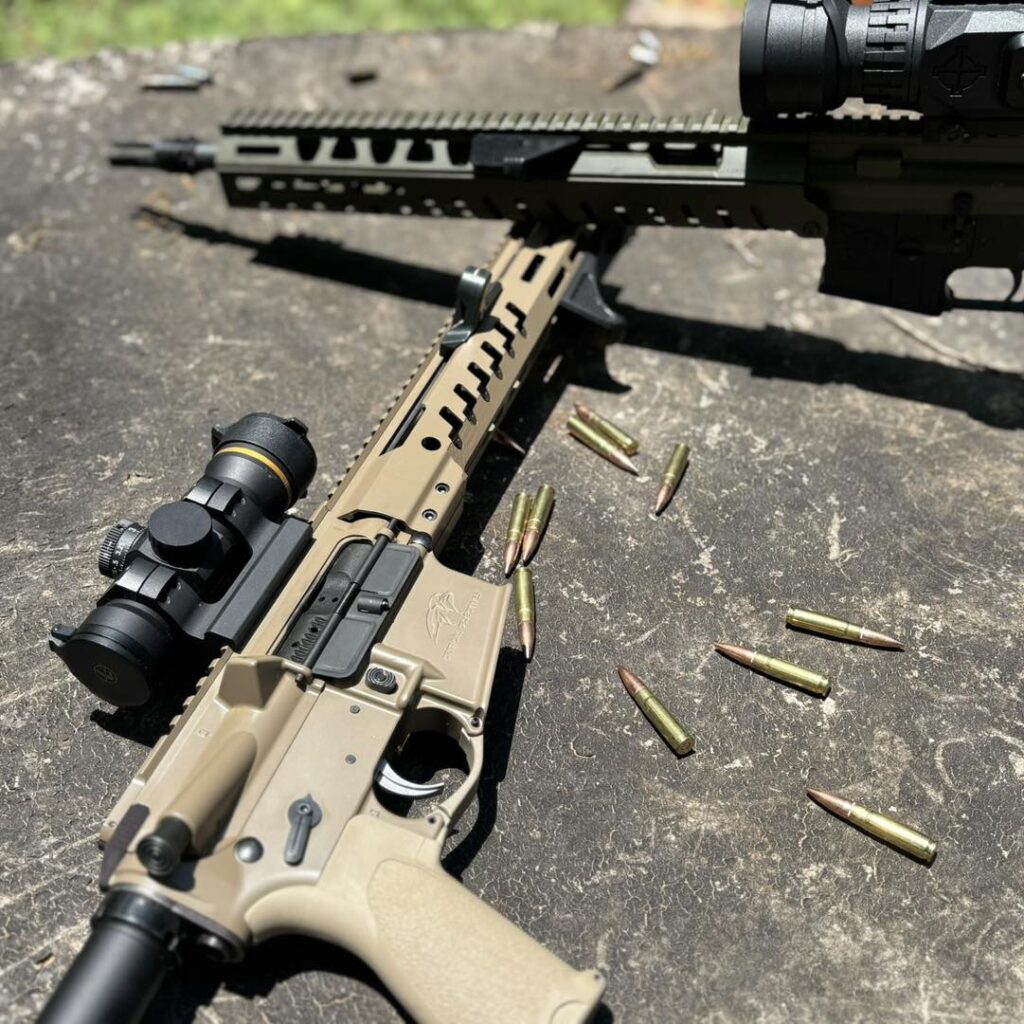
At the end of the day, whether you go with a standard rear charging handle or make the jump to a side charging AR build, you’re still running one of the most versatile, modular, and just plain fun rifle platforms ever designed. The side charging handle is one of those upgrades that many will swear by and some might shrug at — and that’s the beauty of the AR platform. You get to build and customize the gun that fits you. So if you’ve been on the fence about an AR-15 side charging upper, I’d say give one a try if you get the chance to handle one at a range or a buddy’s house before you buy — and if you can get your hands on a forward-mounted system specifically, pay attention to how little your firing hand has to move. Once you feel that difference, you’ll wonder why you put up with the old way so long, and understand why so many AR-15 users don’t go back.